Patient portal
 Brno / Ostrava
 Bratislava / Martin



 Sep 30, 2026
Egg donation: Am I a suitable donor? What are the conditions and possible risks
Find out who can become an egg donor, how the process works and how the clinic ensures safety and medical supervision.



“Egg donation is a process in which a healthy donor, after examination and hormonal stimulation, donates eggs for the treatment of a patient who cannot use her own oocytes. The eggs are fertilised in an embryology laboratory and the resulting embryo is transferred to the recipient’s uterus.”
What egg donation means
Egg donation is part of assisted reproduction for women who cannot become pregnant using their own eggs or whose chance of obtaining a good-quality embryo is very low. Reasons may include older age, premature ovarian failure, genetic risk, repeated unsuccessful IVF, removal of the ovaries, or treatment that has damaged ovarian reserve.
For the recipient, this is not a “substitute” option of lower value. IVF with donor eggs is a medically sophisticated procedure that can offer a high chance of pregnancy where using the woman’s own eggs is no longer a suitable route.
Can I become an egg donor?
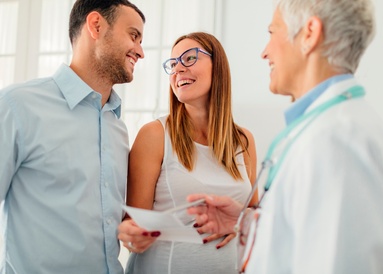
A donor must be a healthy woman who meets medical and legislative criteria. Age, health status, family history, genetic risks, infectious diseases and reproductive health are assessed. The process includes laboratory tests, a gynaecological examination and a consultation.
A woman may become an egg donor if she:
- is approximately up to 34 years of age
- is in good overall health
- has a suitable BMI, usually approximately up to 30
- is not pregnant
- is not breastfeeding
- has a regular or medically acceptable menstrual cycle
- has a normal gynaecological finding
- has sufficient ovarian reserve
- does not have a serious chronic disease
- does not have a serious hereditary disease in her personal or family history
- does not have an active infectious disease
- has negative tests for HIV, hepatitis B and C, syphilis and other monitored infections
- does not have an untreated serious mental-health disorder
- does not engage in risky use of addictive substances
- agrees to hormonal stimulation and egg retrieval
- signs informed consent for donation
- meets the legislative requirements for gamete donation
The specific conditions for egg donation may vary depending on health status, examination results and current legislative requirements, which may change.
If you are considering donation, ask for information during an initial consultation at Reprofit in Brno or Ostrava.
How egg donation works
After approval, the donor undergoes hormonal stimulation of the ovaries. During stimulation, she attends monitoring appointments where follicle growth is assessed. Once the follicles are ready, egg retrieval is performed under brief anaesthesia.
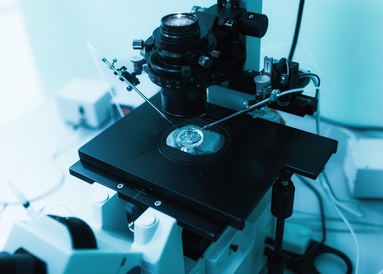
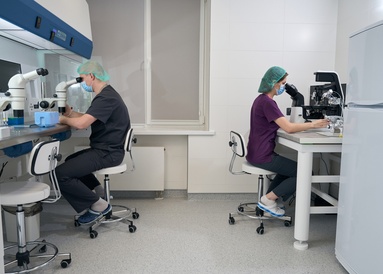
The eggs are then used for fertilisation with sperm from the recipient’s partner or with donor sperm. The resulting embryos are cultured in the laboratory, after which one embryo is transferred to the recipient’s uterus or the embryos are frozen for later use.
Possible risks and safety
Egg donation takes place under medical supervision and includes hormonal stimulation, regular monitoring and subsequent egg retrieval. During stimulation or after retrieval, the donor may temporarily experience, for example, pressure in the lower abdomen or tenderness around the ovaries. This is precisely why the entire process is managed individually, with ongoing monitoring of the ovarian response and clear instructions from the clinic. Possible risks are therefore minimised.
FAQ
Who needs donor eggs?
Most commonly, women with low egg quality or a low egg reserve, after repeated unsuccessful IVF, with a genetic risk, or after treatment that has damaged the ovaries.
Is egg donation safe?
Risks are minimised thanks to the experienced Reprofit team, regular monitoring during stimulation and the overall support provided by the Reprofit clinic.
How is a donor selected?
According to health criteria, examinations, genetic and infectious-disease safety, and the rules of the clinic and applicable legislation.
Is IVF with donor eggs more successful than IVF with a woman’s own eggs at an older age?
Often yes, because egg quality is strongly dependent on age. A doctor can estimate the chance of pregnancy.
You might also be interested in



Egg donation: Am I a suitable donor? What are the conditions and possible risks